

Professional Rebar Coupler Manufacturer — Shenzhen Gulis Building Materials Co., Ltd.


Automatic Rebar Thread Rolling Machine Not Feeding? Fix It Fast with This 5-Step Troubleshooting Method

2026-03-30Visits:

When a fully automatic rebar threading machine suddenly stops feeding, it can slow down processing efficiency—or even delay the entire project. Most of these issues are caused by a combination of minor faults. With a systematic troubleshooting approach, you can identify the root cause within 10 minutes and avoid unnecessary disassembly.


Four Core Fault Sources for Accurate Diagnosis

1. Rolling System Issues (“Teeth” Problems Affect Feeding)

  • Wrong rotation direction: The forward/reverse switch of the rolling head is incorrectly set, conflicting with the rebar feeding direction
  • Specification mismatch: Rolling dies or positioning sleeves do not match the rebar diameter (e.g., Φ25 dies used for Φ20 rebar)
  • Component wear: Die wear exceeding 0.3 mm or cracked positioning sleeves disrupt thread formation

2. Power System Issues (“Weak Heart” Can’t Drive Properly)

  • Phase loss: Missing one phase in three-phase power reduces motor torque (check if all indicator lights are on)
  • Poor electrical contact: Tripped thermal protector not reset, oxidized terminals causing unstable current
  • Motor failure: Lack of lubrication in bearings or damaged coils (abnormal noise or slow speed during startup)
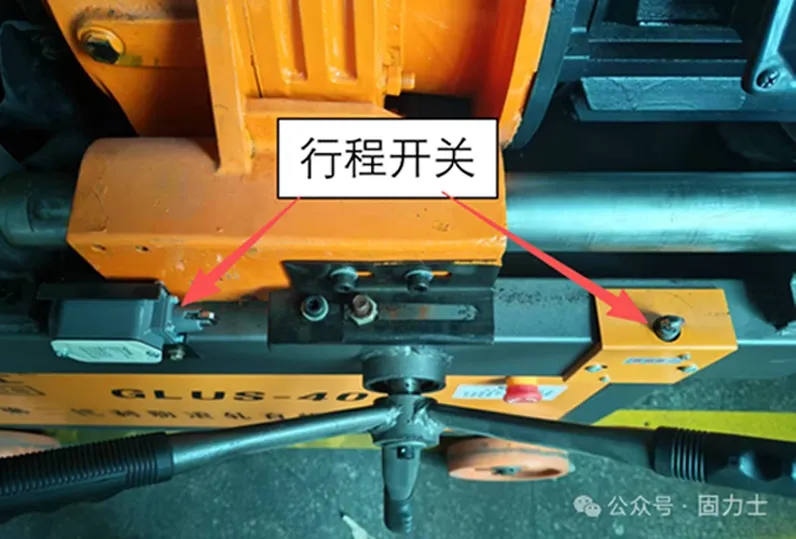
  • Limit switch failure: Faulty or damaged limit switch can prevent the motor from operating

3. Adjustment Errors (Millimeter Deviations Cause Jamming)

  • Incorrect shim placement: Wrong order of shims leads to uneven axial pressure
  • Incorrect center height: Deviation >0.5 mm between rebar and rolling dies causes misalignment and blockage
  • Feed resistance: Lack of lubrication in lead screw nut or worn guide rails increases manual feeding resistance

4. Material Defects (Problems at the Source)

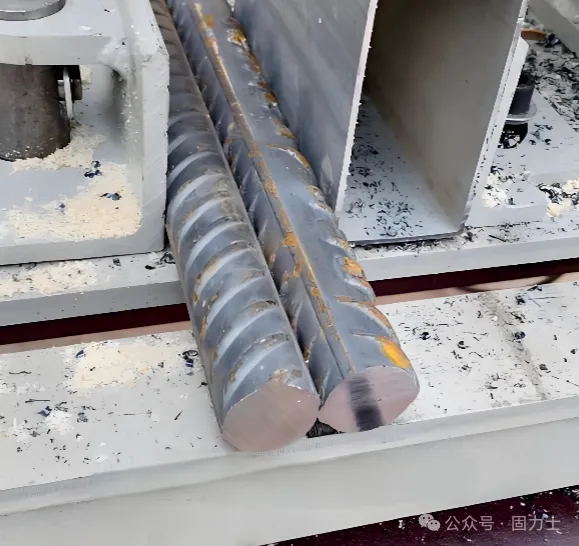
  • Poor end preparation: Uneven cut (verticality >2°) or burrs prevent proper feeding
  • Dirty surface: Oil, rust, or debris causes slipping between rollers and rebar
  • Over-spec processing: Attempting to process rebar beyond machine capacity (e.g., Φ32 machine processing Φ36)
微信图片_2026-03-30_160148_870.jpg


5-Step Troubleshooting Method (Fast and Efficient)

Step 1: Quick Initial Check

  • Check control box: all power indicators on, thermal protector not tripped
  • Test manual feed (power off): ensure smooth operation
  • Inspect rebar: clean cut, no burrs or rust

Step 2: Machine Head Inspection

  • Confirm rolling dies match rebar specifications
  • Check rotation direction matches arrow markings
  • Disassemble head to inspect positioning sleeve order and die wear

Step 3: Electrical Diagnosis

  • Measure voltage: ensure balanced three-phase supply (single phase 220V ±10%)
  • Check circuits: test start button and relay continuity
  • Test motor: runs fine no-load but weak under load → motor needs repair
  • Test limit switch: manually trigger twice and confirm consistent response

Step 4: Precision Calibration

  • Adjust center height: deviation ≤0.2 mm
  • Reinstall shims correctly and tighten nuts for proper roller contact
  • Apply lubrication: use high-temperature lithium grease on lead screw and guide rails, cycle feed 5 times

Step 5: Material Pre-Treatment

  • Standardize cutting: use cold saw, flatness error ≤1 mm (no gas cutting)
  • Clean surface: remove debris with wire brush, clean oil with acetone
  • First-piece inspection: process one sample per batch and verify with ring gauge and go/no-go gauge
微信图片_2026-03-30_160154_943.png


3 Maintenance Tips to Prevent Recurrence

1. Routine Maintenance

  • Clean metal chips and wipe guide rails every shift
  • Lubricate lead screws and bearings weekly
  • Tighten bolts and test emergency stop switch monthly

2. Wear Part Replacement

  • Rolling dies: replace after 800–1000 uses
  • Positioning sleeves: replace every 6–12 months
  • Relays: replace after ~200,000 cycles

3. Proper Operation

  • Do not exceed machine capacity
  • Use 5–8% emulsion coolant
  • Retract the tool before powering off

Summary

Failure to feed is usually a combined issue involving mechanical, electrical, and material factors. By following the workflow of
“Initial Check → Inspection → Calibration → Pre-treatment → Maintenance,”
you can quickly resolve faults and minimize future issues.

👉 Key insight: 70% of failures are caused by improper operation and maintenance. Mastering these methods is far more efficient than waiting for repairs.


Leave Your Message

Leave a message

We use cookie to improve your online experience. By continuing to browse this website, you agree to our use of cookie.

Cookies

Please read our Terms and Conditions and this Policy before accessing or using our Services. If you cannot agree with this Policy or the Terms and Conditions, please do not access or use our Services. If you are located in a jurisdiction outside the European Economic Area, by using our Services, you accept the Terms and Conditions and accept our privacy practices described in this Policy.
We may modify this Policy at any time, without prior notice, and changes may apply to any Personal Information we already hold about you, as well as any new Personal Information collected after the Policy is modified. If we make changes, we will notify you by revising the date at the top of this Policy. We will provide you with advanced notice if we make any material changes to how we collect, use or disclose your Personal Information that impact your rights under this Policy. If you are located in a jurisdiction other than the European Economic Area, the United Kingdom or Switzerland (collectively “European Countries”), your continued access or use of our Services after receiving the notice of changes, constitutes your acknowledgement that you accept the updated Policy. In addition, we may provide you with real time disclosures or additional information about the Personal Information handling practices of specific parts of our Services. Such notices may supplement this Policy or provide you with additional choices about how we process your Personal Information.


Cookies

Cookies are small text files stored on your device when you access most Websites on the internet or open certain emails. Among other things, Cookies allow a Website to recognize your device and remember if you've been to the Website before. Examples of information collected by Cookies include your browser type and the address of the Website from which you arrived at our Website as well as IP address and clickstream behavior (that is the pages you view and the links you click).We use the term cookie to refer to Cookies and technologies that perform a similar function to Cookies (e.g., tags, pixels, web beacons, etc.). Cookies can be read by the originating Website on each subsequent visit and by any other Website that recognizes the cookie. The Website uses Cookies in order to make the Website easier to use, to support a better user experience, including the provision of information and functionality to you, as well as to provide us with information about how the Website is used so that we can make sure it is as up to date, relevant, and error free as we can. Cookies on the Website We use Cookies to personalize your experience when you visit the Site, uniquely identify your computer for security purposes, and enable us and our third-party service providers to serve ads on our behalf across the internet.

We classify Cookies in the following categories:
 ●  Strictly Necessary Cookies
 ●  Performance Cookies
 ●  Functional Cookies
 ●  Targeting Cookies


Cookie List
A cookie is a small piece of data (text file) that a website – when visited by a user – asks your browser to store on your device in order to remember information about you, such as your language preference or login information. Those cookies are set by us and called first-party cookies. We also use third-party cookies – which are cookies from a domain different than the domain of the website you are visiting – for our advertising and marketing efforts. More specifically, we use cookies and other tracking technologies for the following purposes:

Strictly Necessary Cookies
These cookies are necessary for the website to function and cannot be switched off in our systems. They are usually only set in response to actions made by you which amount to a request for services, such as setting your privacy preferences, logging in or filling in forms. You can set your browser to block or alert you about these cookies, but some parts of the site will not then work. These cookies do not store any personally identifiable information.

Functional Cookies
These cookies enable the website to provide enhanced functionality and personalisation. They may be set by us or by third party providers whose services we have added to our pages. If you do not allow these cookies then some or all of these services may not function properly.

Performance Cookies
These cookies allow us to count visits and traffic sources so we can measure and improve the performance of our site. They help us to know which pages are the most and least popular and see how visitors move around the site. All information these cookies collect is aggregated and therefore anonymous. If you do not allow these cookies we will not know when you have visited our site, and will not be able to monitor its performance.

Targeting Cookies
These cookies may be set through our site by our advertising partners. They may be used by those companies to build a profile of your interests and show you relevant adverts on other sites. They do not store directly personal information, but are based on uniquely identifying your browser and internet device. If you do not allow these cookies, you will experience less targeted advertising.

How To Turn Off Cookies
You can choose to restrict or block Cookies through your browser settings at any time. Please note that certain Cookies may be set as soon as you visit the Website, but you can remove them using your browser settings. However, please be aware that restricting or blocking Cookies set on the Website may impact the functionality or performance of the Website or prevent you from using certain services provided through the Website. It will also affect our ability to update the Website to cater for user preferences and improve performance. Cookies within Mobile Applications

We only use Strictly Necessary Cookies on our mobile applications. These Cookies are critical to the functionality of our applications, so if you block or delete these Cookies you may not be able to use the application. These Cookies are not shared with any other application on your mobile device. We never use the Cookies from the mobile application to store personal information about you.

If you have questions or concerns regarding any information in this Privacy Policy, please contact us by email at . You can also contact us via our customer service at our Site.