English

Failure Modes of Rebar Joints and Their On-Site Diagnostic Methods
01 Why Must You Understand the Failure Modes of Joints?
In mechanical rebar connections, many people focus on price and specifications, but overlook a core question:
👉 How exactly does a joint "fail"?
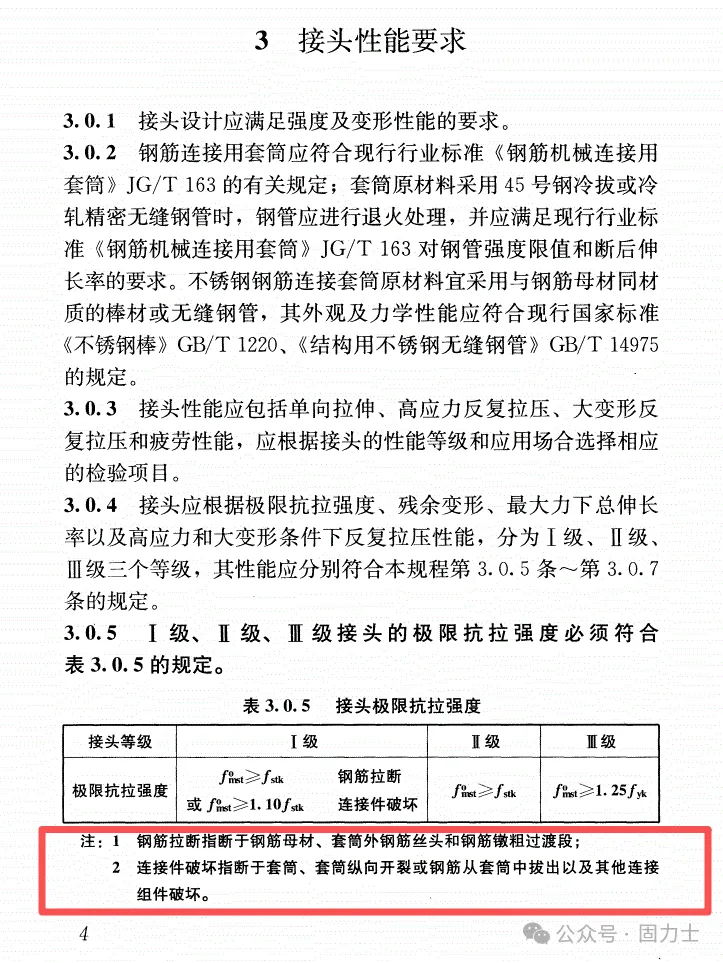
In fact, there is only one ultimate criteria for judging engineering quality: Whether the joint strength is $\ge$ the strength of the rebar base metal.
According to the design principle of the Chinese specification JGJ 107-2016: The joint strength must be higher than the base metal, and failure should occur in the rebar base metal.
✔ Therefore, a qualified joint should preferentially undergo base metal failure.
❌ If joint failure or slippage occurs, it constitutes a significant quality risk.
02 Three Core Failure Modes
1️⃣ Base Metal Failure (The Most Ideal State)
👉 Symptoms:
The fracture occurs far away from the sleeve position.
The rebar shows obvious necking.
The joint area remains completely intact.
👉 What it means:
✔ The joint strength is higher than the rebar body itself.
✔ It fully complies with specification requirements.
👉 One-sentence conclusion: The structure is safest only when the joint remains "invisible" under tension.
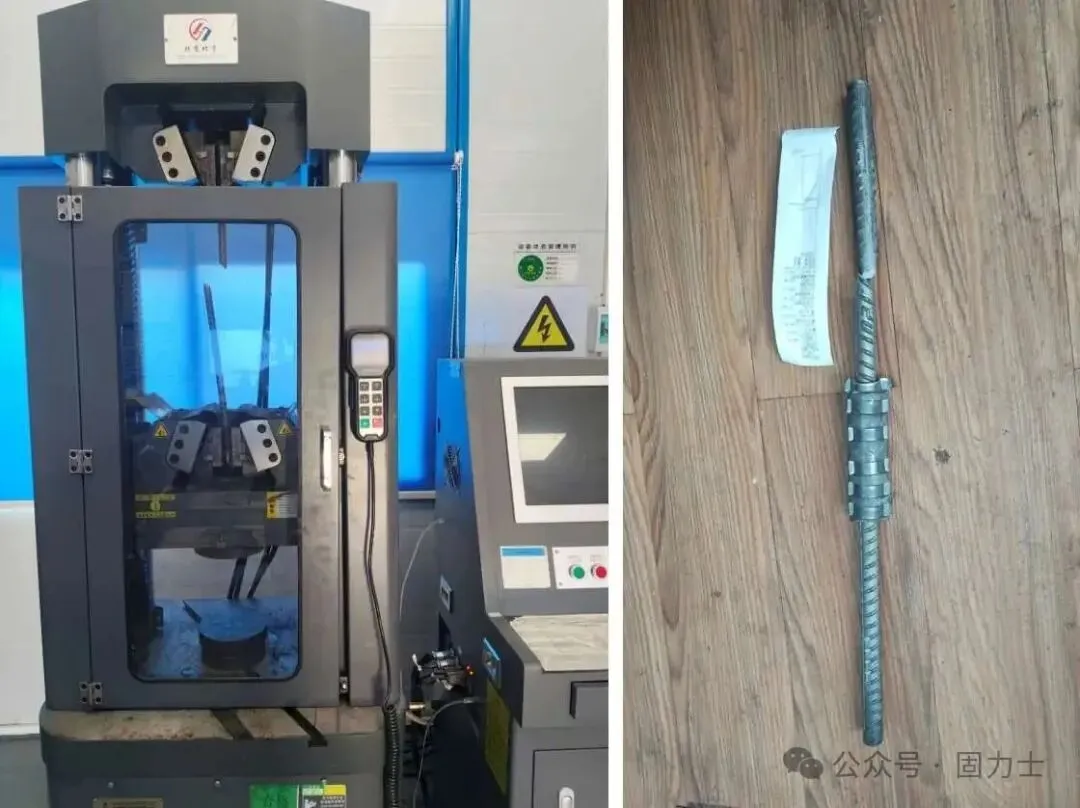
2️⃣ Joint Failure (A Typical Quality Problem)
👉 Symptoms:
Fracture occurs right at the sleeve or the threaded end.
The joint itself is visibly damaged.
👉 Common Causes:
Substandard processing of the threaded end.
Insufficient strength of the sleeve material.
Incomplete tightening or improper installation.
Misalignment (not coaxial) of the joint.
👉 Engineering Judgment:
❌ This is an unqualified joint.
❌ Rectification or replacement is mandatory.
3️⃣ Slippage Failure (The Most Hidden and Dangerous)
👉 Symptoms:
The rebar does not break.
The rebar is "pulled out" from the sleeve.
The displacement exceeds the allowable standard.
👉 Cause Analysis:
Insufficient thread length.
Tightening torque does not meet the standard.
Poor thread precision.
👉 Risks:
⚠ Insufficient load-bearing capacity.
⚠ Highly difficult to detect on-site with the naked eye.
03 Five Common Detailed Failures in the Field
👉 In addition to the three major types, the following problems are also frequently encountered on-site:
1️⃣ Threaded End Snapping → Severe weakening during thread processing.
2️⃣ Sleeve Cracking → Substandard material or insufficient wall thickness.
3️⃣ Thread Shear Failure → Engagement failure between internal and external threads.
4️⃣ Joint Loosening → Tightening torque not meeting the standard / vibration environments.
5️⃣ Eccentric Loading Fracture → Stress concentration caused by non-coaxial installation.
04 How to Quickly Judge Joint Qualification On-Site?
👉 There is a simple and practical diagnostic formula used in the field:
"Check the fracture point, check the necking, check the slippage."
✔ Broken at the rebar → Qualified
❌ Broken at the joint → High Risk
⚠ Pulled out → Critical Danger
05 Why Do High-Quality Joints All Pursue "Base Metal Failure"?
There is only one fundamental reason:
👉 To make the joint "disappear" within the structure.
In other words:
Its strength is no weaker than the rebar.
Its load-bearing performance is identical to the rebar.
It never becomes a weak point in the structure.
06 How to Prevent Joint Failure?
In actual engineering projects, to stably achieve "base metal failure," four critical stages must be strictly controlled:
👉 Standard Practices:
✔ Precision Rolling Process → Ensures the strength of the threaded end is not weakened.
✔ High-Strength Alloy Steel Sleeves → Prevents the sleeve from cracking.
✔ Standardized Torque Control → Eliminates slippage issues entirely.
✔ Factory Full-Inspection Mechanism → Guarantees consistency and stability.
📊 Conclusion (Perfect for Sharing)
👉 Rebar connection may seem simple, but it is a critical node for structural safety.
A truly excellent joint has only one standard:
👉 Snap the rebar, do not break the joint.