English

Rebar Thread Ends Keep Failing on Site? Avoid These 3 Common Pitfalls in Thread Rolling Machine Processing
Anyone involved in rebar processing knows that incomplete threads or poorly formed thread profiles not only fail inspection but also directly affect the connection strength at beam–column joints. Rework wastes both materials and time, and it can seriously delay the construction schedule.
In fact, the causes of defective rebar thread ends during rolling are usually quite concentrated. Today, based on common HRB400E and HRB500E rebar processing scenarios on construction sites, we’ll walk through the main troubleshooting methods for incomplete threads. Follow these steps, and the qualification rate of your threaded ends can improve significantly.
1. Focus on the “Dedicated Rebar Thread Rolling Dies”: Use the Right Ones and Replace Worn Ones
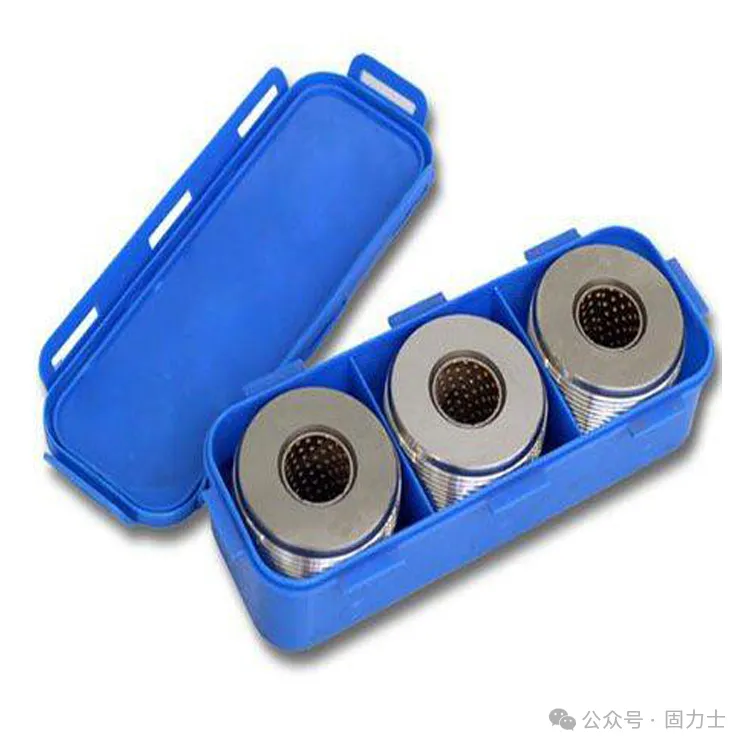
Thread rolling dies used for rebar are different from those used in general metal machining. They must match the ribbed structure and strength of reinforcing steel, making them the key component in thread formation.
Common Site Problems & How to Identify Them
Incorrect die specification
For example, when processing HRB400E rebar with a diameter of 25 mm, if a 20 mm die is used, the threads may become crushed or incomplete and will not fit into the coupler.
Worn-out rolling dies
Check two signs:
The thread surface shows broken teeth, where each thread ring is missing small sections.
The die grooves contain sintered steel debris, and the tooth edges feel dull when touched.
If you continue processing with worn dies, the threads will almost certainly be incomplete.
Solutions & Prevention Tips
Match die models before replacement
The die packaging usually specifies compatible rebar diameters and thread types, such as “Φ20–22 mm straight thread.” Always match the dies with the rebar being processed.
Replace worn dies promptly
Rebar has high hardness (HRB400E typically HRC 20–25), so dies wear quickly. Generally, inspect them after processing 500–800 rebars. Replace immediately if broken teeth or dull edges are found.
Use proper cooling fluid
Always turn on the cooling pump during processing. Use specialized rebar thread rolling coolant instead of engine oil. It reduces temperature, prevents die sintering, minimizes debris buildup, and produces smoother threads.
2. Incomplete Threads Often Indicate a Problem with the “Transmission System”
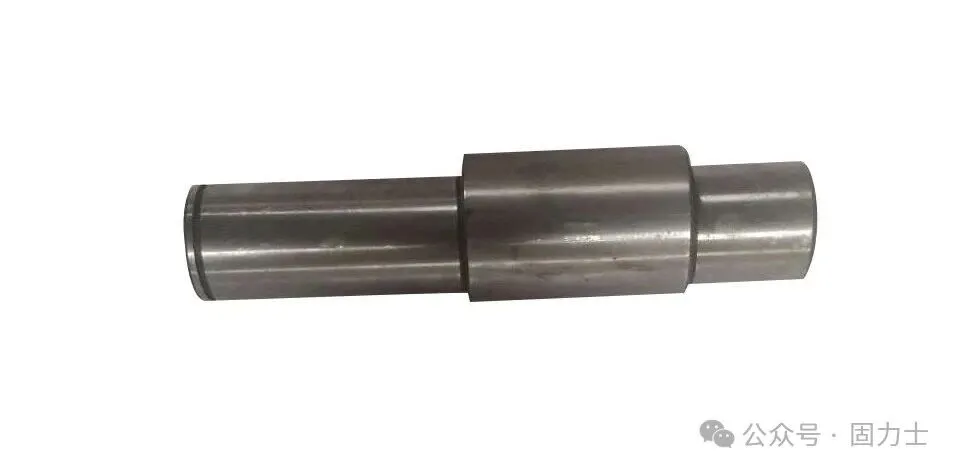
Deformed or Broken Eccentric Shaft
The eccentric shaft is essentially the “heart” of the rolling die transmission system. Its condition directly determines the positioning accuracy of the dies.
If the shaft becomes deformed, the dies no longer rotate smoothly and begin to operate off-center. During rolling, the pressure becomes uneven:
Areas with higher pressure produce overly deep thread roots.
Areas with lower pressure lead to missing or flattened thread crests.
If the eccentric shaft breaks, the dies lose control entirely, and incomplete threads become inevitable.
Solution:
When incomplete threads appear and the eccentric shaft is suspected:
Stop the machine immediately.
Carefully remove the rolling die assembly.
Inspect the eccentric shaft visually for bending, cracks, or fractures.
Use a dial indicator to measure radial runout. If the error exceeds 0.05 mm, the shaft must be replaced with an original-specification component to restore proper alignment.
Worn or Chipped Rolling Dies
Rolling dies work continuously under heavy loads. Over time, their tooth patterns wear out or chip, preventing proper engagement with the rebar.
When the teeth lose sharpness or precision:
The rolling process cannot form complete thread profiles.
Thread defects become frequent, often resulting in rejected products.
Solution:
Inspect the die surfaces carefully:
Look for wear grooves, chipped edges, or peeling areas.
Use go/no-go gauges to test thread accuracy.
If the go gauge fails, the thread size is too large.
If the no-go gauge passes, the thread size is too small.
In either case, replace the rolling dies as a matched set. Never mix new and old dies, as this causes accuracy deviations and inconsistent thread quality.
3. Check the Rebar Itself: Poor Preparation Can Ruin Even the Best Machine
Many defective thread ends are not caused by the machine but by improper preparation of the rebar before processing. On busy construction sites, these details are often overlooked.
Rebar Ends Not Cut Flat
If the rebar end is angled or has burrs, the clamping center becomes misaligned during rolling. This can result in:
Uneven thread depth
Missing 1–2 thread turns at the end
Solution:
Cut the rebar using a rebar cutting machine so the end face is perpendicular to the bar axis (error ≤ 1°). Remove burrs with an angle grinder.
Rebar Not Straightened Before Processing
If the rebar is bent, especially after straightening from coil stock, it may wobble during clamping. This causes:
Misaligned threads
Incomplete or irregular thread profiles
Solution:
Ensure the rebar is fully straightened before rolling, particularly within 30 cm of the end, to maintain proper alignment.
Rebar Diameter Out of Tolerance
For example, HRB400E Φ25 rebar:
If the diameter exceeds 25.4 mm, the rolling dies cannot form the thread properly and may break teeth.
If the diameter is below 24.6 mm, the thread profile becomes too thin and cannot engage tightly with the coupler.
Solution:
Measure the rebar diameter with a caliper before processing and ensure it falls within the allowable tolerance specified in JGJ107 standards (± 0.4 mm for Φ25).
A Practical Reminder from the Construction Site
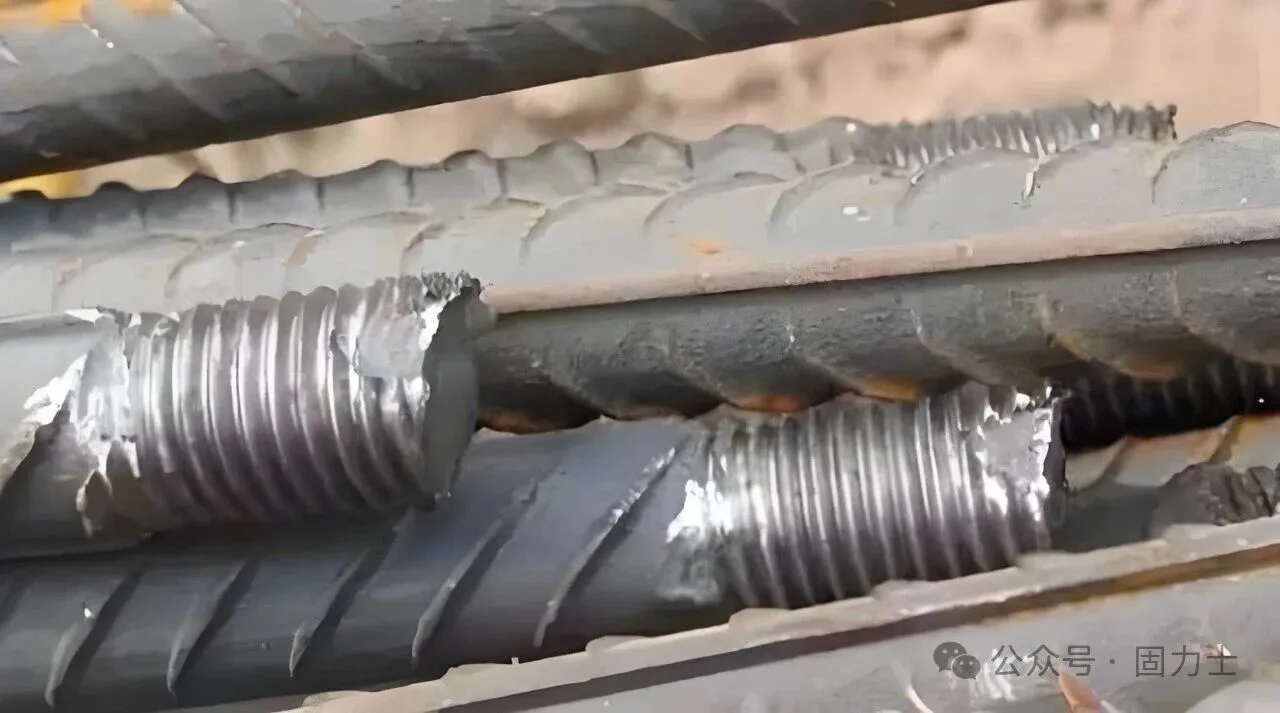
Rebar thread processing is not a job that can be done carelessly. According to the JGJ107 specification, threads must have full profiles with no broken or missing teeth. This is not just an inspection requirement—it is the minimum standard for structural safety.
Spending five minutes each morning checking the rolling dies and ensuring the rebar ends are properly cut is far easier than reworking dozens of defective rebars later.
Have you ever encountered any unusual faults while repairing thread rolling machines on site? Feel free to share your experiences and solutions.
If you found this helpful, share it with your rebar crew so everyone can avoid unnecessary problems and save both time and effort. Follow GLUS for more practical tips—when equipment issues arise, you’ll have the solutions ready.