

Standard Processing Technology for Rebar Extrusion Coupler Connections

2026-01-30Visits:

Rebar extrusion coupler connection is a widely used mechanical connection method in construction engineering. Known for its high reliability, stable quality, and convenient installation, it has become a mature alternative to traditional welding and lapping methods.

This article provides a standardized and practical overview of the processing technology for rebar extrusion coupler connections, helping engineers and contractors better understand and control on-site quality.


1. Basic Principle and Overview

Rebar extrusion coupler connection, also known as cold extrusion rebar connection, is a type of mechanical rebar joint.

Working Principle

  • A high-pressure hydraulic pump is used as the power source.

  • An extrusion press applies strong radial pressure to a specially designed steel coupler.

  • The coupler undergoes plastic deformation, tightly gripping the transverse and longitudinal ribs of both rebars.

  • Load transfer is achieved through friction force and mechanical interlocking between the coupler and rebars.

Key Advantages

  • High reliability: Joint strength can reach or exceed the strength of the parent rebar.

  • Wide applicability: Suitable for different diameters and grades of rebars, especially where welding is not allowed or difficult.

  • No open flame: Safe, environmentally friendly, and unaffected by weather conditions.

  • Simple operation: Equipment is easy to use, with short training cycles.

  • Stable performance: Minimal influence from human factors, ensuring consistent quality.


2. Pre-Construction Preparation

2.1 Materials and Equipment

Rebars
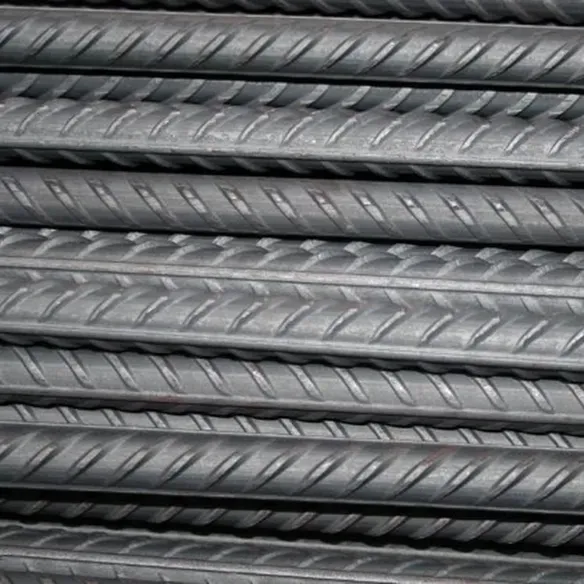
  • Rebar ends must be straight, without bending.

  • Cut ends should be perpendicular to the rebar axis, free from burrs or “horse-hoof” shapes.

  • Positioning and inspection marks must be clearly marked on the rebar ends.

Extrusion Couplers
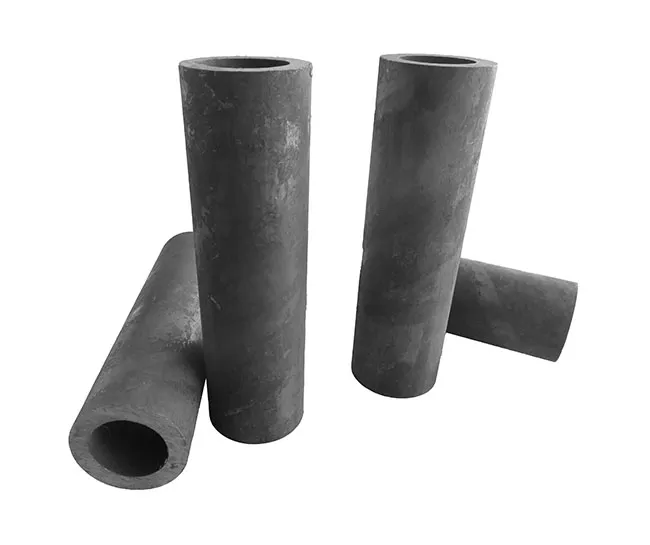
  • Material, dimensions, and mechanical properties must comply with design requirements and relevant standards such as JGJ 107 – Technical Specification for Mechanical Splicing of Steel Reinforcing Bars.

  • The surface must display manufacturer identification, extrusion mark lines, and rebar size codes.

  • No cracks, corrosion, or visible defects are allowed.

Extrusion Equipment
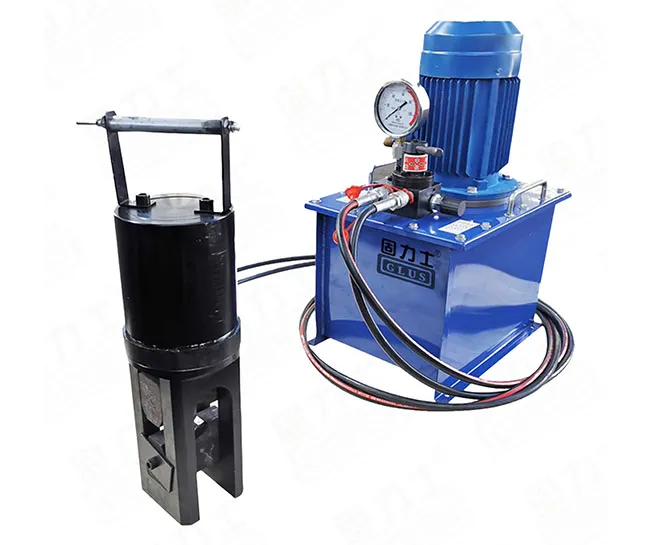
  • Extrusion press

  • High-pressure hydraulic pump

  • High-pressure oil hoses

  • Dies matched to the rebar diameter

Auxiliary Tools

  • Rebar cutting machine

  • Grinding wheel saw

  • Marking tools

  • Vernier calipers

  • Measuring gauges


2.2 Equipment Inspection and Trial Test

  • Connect all equipment and check the hydraulic pump, hoses, and press for normal operation.

  • Select the correct dies according to the rebar size.

  • Before mass production, conduct process qualification tests on site:

    • Produce at least three test joints

    • Perform tensile strength testing

    • Construction can proceed only after test results meet the requirements.


3. Standard Construction Process

(Radial Extrusion Method)

Step 1: Rebar End Preparation and Marking

  • Flat cutting: Cut rebar ends flat using a grinding wheel saw or dedicated cutter.

  • Rust and impurity removal: Clean rust, oil, cement slurry, and contaminants within approximately 200 mm from the rebar end until metallic luster is visible.

  • Marking:

    • Positioning mark: Indicates the insertion depth to ensure both rebars meet at the center of the coupler.

    • Inspection mark: Marked about 2 mm outside the positioning mark to verify rebar displacement after extrusion.


Step 2: Coupler Installation

  • Slide the coupler onto one rebar.

  • Ensure the extrusion guide lines on the coupler are perpendicular to the extrusion direction for accurate positioning.


Step 3: Alignment and Extrusion

  • Insert the second rebar into the coupler until both rebar ends are tightly butted at the center.

  • Adjust both rebars so the positioning marks are symmetrically aligned at both ends of the coupler.

  • Align the extrusion die with the coupler’s guide marks.

  • Start the hydraulic pump and apply pressure:

    • Pressure must reach the rated value specified by the equipment.

    • Maintain pressure for 2–3 seconds, then release.

Extrusion Sequence (Critical)

  • Principle: Start from the center and proceed toward both ends.

  • Purpose: Eliminate internal air gaps and improve joint compactness.

  • Sequence:

    1. Extrude the middle indentation first

    2. Extrude the indentation near the operator

    3. Extrude the indentation at the far end


Step 4: Joint Inspection

Immediately after extrusion, check:

  • Indentation depth: Measure the minimum outer diameter using a gauge or caliper; this is the most critical on-site inspection item.

  • Number of indentations: Must meet the specified requirements; no missing or insufficient extrusions are allowed.

  • Rebar displacement: The inspection mark must be fully pressed into the coupler. Any exposed mark indicates insufficient insertion.

  • Appearance: No cracks, folds, or surface defects are permitted.


4. Quality Control Key Points

  • Pressure control: Insufficient pressure directly reduces joint strength.

  • Correct extrusion sequence: Always follow “center first, then both ends”.

  • Accurate marking: Clear and precise marking ensures correct insertion depth.

  • Cleanliness: Rebar ends and coupler interiors must be clean and free of contaminants.

  • Equipment maintenance: Regularly calibrate pressure gauges and inspect equipment.

  • Qualified operators: Personnel must be professionally trained and certified.

  • Low-temperature construction: Additional measures are required when ambient temperature is below –20°C.


5. Quality Inspection and Acceptance

Rebar extrusion coupler connections are inspected in two stages:

Process Qualification Test

  • Conducted before construction to verify feasibility and reliability of the process.

On-Site Inspection

  • Appearance inspection: 100% visual and dimensional inspection (indentation depth and rebar displacement).

  • Mechanical performance test:

    • Randomly sample joints from the structure

    • Perform uniaxial tensile tests

    • Acceptance criteria and batch size must strictly follow JGJ 107 requirements.


Conclusion

Rebar extrusion coupler connection is a proven and reliable mechanical splicing technology. Its quality control hinges on three core elements:

Pressure · Sequence · Marking

By strictly following standard procedures and controlling critical steps, high-quality rebar joints can be consistently achieved, ensuring the structural safety and durability of construction projects.

GLUS remains committed to providing standardized couplers, reliable equipment, and professional technical support for global construction projects.


Leave Your Message

Leave a message

We use cookie to improve your online experience. By continuing to browse this website, you agree to our use of cookie.

Cookies

Please read our Terms and Conditions and this Policy before accessing or using our Services. If you cannot agree with this Policy or the Terms and Conditions, please do not access or use our Services. If you are located in a jurisdiction outside the European Economic Area, by using our Services, you accept the Terms and Conditions and accept our privacy practices described in this Policy.
We may modify this Policy at any time, without prior notice, and changes may apply to any Personal Information we already hold about you, as well as any new Personal Information collected after the Policy is modified. If we make changes, we will notify you by revising the date at the top of this Policy. We will provide you with advanced notice if we make any material changes to how we collect, use or disclose your Personal Information that impact your rights under this Policy. If you are located in a jurisdiction other than the European Economic Area, the United Kingdom or Switzerland (collectively “European Countries”), your continued access or use of our Services after receiving the notice of changes, constitutes your acknowledgement that you accept the updated Policy. In addition, we may provide you with real time disclosures or additional information about the Personal Information handling practices of specific parts of our Services. Such notices may supplement this Policy or provide you with additional choices about how we process your Personal Information.


Cookies

Cookies are small text files stored on your device when you access most Websites on the internet or open certain emails. Among other things, Cookies allow a Website to recognize your device and remember if you've been to the Website before. Examples of information collected by Cookies include your browser type and the address of the Website from which you arrived at our Website as well as IP address and clickstream behavior (that is the pages you view and the links you click).We use the term cookie to refer to Cookies and technologies that perform a similar function to Cookies (e.g., tags, pixels, web beacons, etc.). Cookies can be read by the originating Website on each subsequent visit and by any other Website that recognizes the cookie. The Website uses Cookies in order to make the Website easier to use, to support a better user experience, including the provision of information and functionality to you, as well as to provide us with information about how the Website is used so that we can make sure it is as up to date, relevant, and error free as we can. Cookies on the Website We use Cookies to personalize your experience when you visit the Site, uniquely identify your computer for security purposes, and enable us and our third-party service providers to serve ads on our behalf across the internet.

We classify Cookies in the following categories:
 ●  Strictly Necessary Cookies
 ●  Performance Cookies
 ●  Functional Cookies
 ●  Targeting Cookies


Cookie List
A cookie is a small piece of data (text file) that a website – when visited by a user – asks your browser to store on your device in order to remember information about you, such as your language preference or login information. Those cookies are set by us and called first-party cookies. We also use third-party cookies – which are cookies from a domain different than the domain of the website you are visiting – for our advertising and marketing efforts. More specifically, we use cookies and other tracking technologies for the following purposes:

Strictly Necessary Cookies
These cookies are necessary for the website to function and cannot be switched off in our systems. They are usually only set in response to actions made by you which amount to a request for services, such as setting your privacy preferences, logging in or filling in forms. You can set your browser to block or alert you about these cookies, but some parts of the site will not then work. These cookies do not store any personally identifiable information.

Functional Cookies
These cookies enable the website to provide enhanced functionality and personalisation. They may be set by us or by third party providers whose services we have added to our pages. If you do not allow these cookies then some or all of these services may not function properly.

Performance Cookies
These cookies allow us to count visits and traffic sources so we can measure and improve the performance of our site. They help us to know which pages are the most and least popular and see how visitors move around the site. All information these cookies collect is aggregated and therefore anonymous. If you do not allow these cookies we will not know when you have visited our site, and will not be able to monitor its performance.

Targeting Cookies
These cookies may be set through our site by our advertising partners. They may be used by those companies to build a profile of your interests and show you relevant adverts on other sites. They do not store directly personal information, but are based on uniquely identifying your browser and internet device. If you do not allow these cookies, you will experience less targeted advertising.

How To Turn Off Cookies
You can choose to restrict or block Cookies through your browser settings at any time. Please note that certain Cookies may be set as soon as you visit the Website, but you can remove them using your browser settings. However, please be aware that restricting or blocking Cookies set on the Website may impact the functionality or performance of the Website or prevent you from using certain services provided through the Website. It will also affect our ability to update the Website to cater for user preferences and improve performance. Cookies within Mobile Applications

We only use Strictly Necessary Cookies on our mobile applications. These Cookies are critical to the functionality of our applications, so if you block or delete these Cookies you may not be able to use the application. These Cookies are not shared with any other application on your mobile device. We never use the Cookies from the mobile application to store personal information about you.

If you have questions or concerns regarding any information in this Privacy Policy, please contact us by email at . You can also contact us via our customer service at our Site.