English

A Small Detail That Carries Global Structural Safety Logic
On construction sites around the world, there is a detail that often confuses newcomers.
When installing threaded rebar couplers, workers intentionally leave one or two threads visible, instead of screwing the rebar fully “flush” into the coupler.
At first glance, it looks unfinished.
Some even question: “Is this sloppy work? Is someone cutting corners?”
In reality, this seemingly “incomplete” action is neither a mistake nor a shortcut.
It is a deliberate, code-driven practice, rooted in structural mechanics, installation quality control, and long-term safety performance.
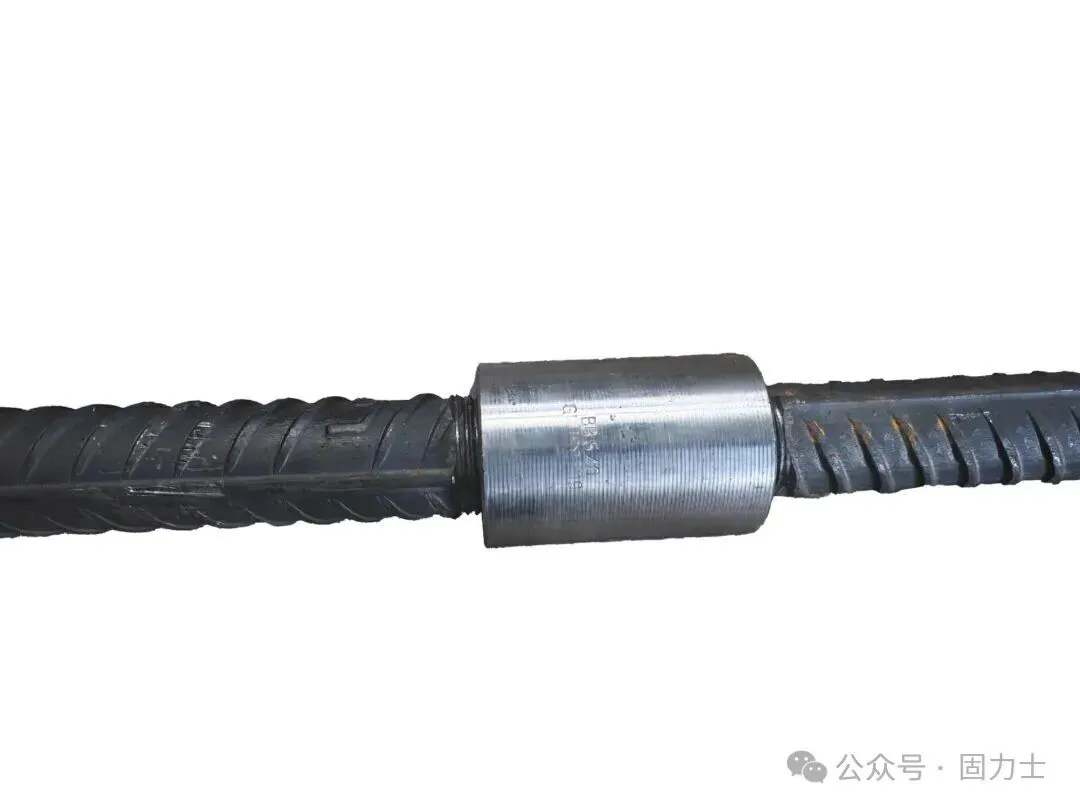
The Misconception: “Tighter Must Be Better”
Many people intuitively treat rebar couplers like ordinary bolts and nuts:
the tighter, the better; fully screwed in, zero gap, perfectly hidden threads.
But in structural engineering, especially in mechanical rebar connections, over-tightening is not excellence—it is risk.
A rebar coupler is not designed to “clamp” two bars with excessive axial compression.
It is designed to:
Transfer tensile force
Maintain ductility
Ensure predictable failure behavior
The Chinese Standard: Clear and Explicit
China’s widely adopted standard, JGJ 107 – Technical Specification for Mechanical Splicing of Reinforcing Steel Bars, states clearly:
Rebar threaded ends shall be positioned symmetrically inside the coupler and bear against each other.
The number of exposed threads shall not exceed 2 pitches (2P).
Visible threads serve as an inspection indicator confirming proper engagement.
Here, P = thread pitch, meaning no more than two visible threads.
Leaving 1–2 exposed threads is therefore not optional—it is the optimal installation zone defined by the code.
Why Fully Screwing In Is Actually Dangerous
If both rebars are forcibly tightened until no thread is visible, several problems can occur:
Ironically, the joint that looks the tightest may be the least forgiving when it matters most.
The Hidden Power of Exposed Threads: Visual Quality Control
Leaving 1–2 threads visible provides something invaluable on real construction sites:
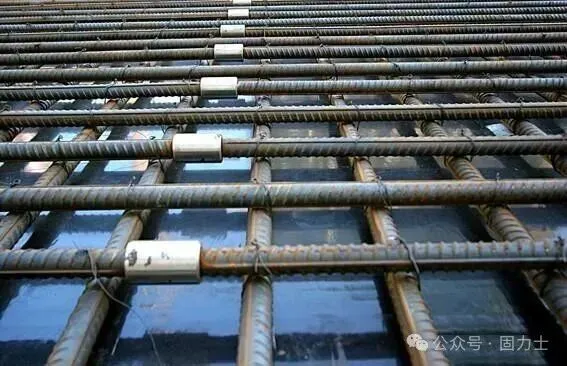
Instant visual inspection
On projects with tens of thousands of couplers, inspectors cannot measure torque or dismantle joints one by one.
Visible threads allow inspectors to identify problems immediately:
0 visible threads
→ Possible short threading, improper bar engagement, unreliable force transferMore than 2 visible threads
→ Insufficient tightening, reduced load capacity
This transforms a hidden structural connection into a standardized, visible quality marker.
Is This Only a Chinese Practice? Absolutely Not.
American Standards (ASTM)
In the United States:
ASTM A1034 / A1044 (rebar couplers)
ACI 318 (Building Code Requirements for Structural Concrete)
These standards emphasize:
Full thread engagement
Proper seating of bar ends
Avoidance of excessive axial stress
While U.S. codes may not always specify “2 exposed threads” explicitly, manufacturers’ installation manuals and inspection criteria commonly require visible confirmation of full engagement.
The principle is identical:
Engagement must be complete, verifiable, and free of harmful preload.
British & European Standards (BS / EN)
In the UK and Europe:
BS 8110 / BS EN 1992 (Eurocode 2)
BS EN 13369 & EN ISO mechanical splice references
CARES-approved coupler systems
These systems:
Require correct internal bar positioning
Prohibit bottoming-out or forced compression
Use visual and dimensional indicators to verify proper installation
Most CARES-approved couplers are designed so that a small amount of thread remains visible, enabling site inspection without dismantling.
Again, the wording differs—but the engineering intent is the same.