

Why a Mechanical Coupler?

2025-12-10 Visits:
In the realm of construction and mechanical engineering, ensuring strong, reliable connections between components is paramount. Whether it’s joining reinforcing bars in concrete structures or connecting shafts in machinery, the integrity of these connections directly influences safety, durability, and performance. This is where mechanical couplers come into play.


So, why a mechanical coupler? This question is at the heart of modern structural design and mechanical systems. Mechanical couplers offer a superior alternative to traditional methods such as lap splicing or direct welding, delivering enhanced strength, reduced congestion, and improved efficiency.

What Is a Mechanical Coupler?


mechanical coupler is a device used to join two components, typically reinforcing bars (rebar) in concrete construction or shafts in mechanical applications, to create a continuous load path. Unlike traditional lap splices, which rely on overlapping bars and concrete for load transfer, mechanical couplers provide a direct, mechanical connection that transfers loads independently of the surrounding material.

Key Functions of Mechanical Couplers:


  • Load Transfer: Transmit tensile, compressive, or torsional forces efficiently between connected elements.
  • Alignment: Maintain precise alignment between joined parts, reducing misalignment issues.
  • Structural Continuity: Ensure a continuous reinforcement path, critical for structural integrity.
  • Space Optimization: Reduce congestion in reinforcement zones, allowing for more compact designs.

Why a Mechanical Coupler? Key Benefits

1. Enhanced Structural Integrity


One of the most compelling reasons to use mechanical couplers is the improved structural integrity they provide. Unlike lap splices, which depend on concrete to transfer loads, mechanical couplers develop their strength independently. This results in:


  • Full Strength and Ductility: Mechanical couplers do not alter the metallurgy of reinforcing steel, allowing the bars to develop their full strength and ductility.
  • Continuous Load Path: They provide a direct mechanical connection that ensures load continuity without relying on concrete bond.
  • Superior Performance in Seismic Zones: Mechanical splices meet or exceed building code requirements, delivering 125% to 150% greater capacity than lap splices. Type 2 couplers, in particular, are suitable for seismic applications where inelastic yielding occurs.

2. Reduced Congestion and Optimized Design


Lap splicing increases rebar congestion, especially in critical zones like columns and beam joints. This congestion can lead to:


  • Difficult Concrete Placement: Higher likelihood of voids and rock pockets.
  • Larger Structural Elements: To accommodate congested reinforcement, designers often increase member sizes, which reduces usable floor space.


Mechanical couplers mitigate these issues by:


  • Allowing the use of larger diameter bars in smaller columns.
  • Reducing the number of overlapping bars, thus minimizing congestion.
  • Enabling more efficient structural designs with smaller columns and beams, saving material costs and increasing usable space.

3. Cost-Effectiveness and Time Savings


Although mechanical couplers may have a higher upfront cost than lap splices, they offer significant savings by:


  • Reducing labor costs: Installation is faster and requires less skilled labor compared to complex lap splicing.
  • Accelerating construction schedules: Quicker installation means faster project completion.
  • Eliminating lap length calculations: Simplifies design and reduces errors.
  • Lowering material waste: Especially beneficial when using epoxy-coated bars, which require longer lap lengths.

4. Compliance with Building Codes and Standards


Modern building codes, such as ACI 318-19 and IS 456:2000, require mechanical splices to have higher performance than lap splices. Mechanical couplers meet stringent criteria including:


  • Load capacity: Typically 125% of the yield strength of the bar.
  • Seismic performance: Type 2 couplers are designed for inelastic regions subject to seismic forces.
  • Testing and certification: Third-party testing ensures reliability.

Types of Mechanical Couplers


Understanding the different types of mechanical couplers is essential to selecting the right solution for your project.

1. Threaded Couplers

HRBa500.jpg

  • Use a threaded sleeve that screws onto prepared threaded ends of rebars.
  • Provide a strong, direct connection without reducing bar size.
  • Require special bar-end preparation including threading and protection from corrosion.
  • Commonly used in tension and compression members.

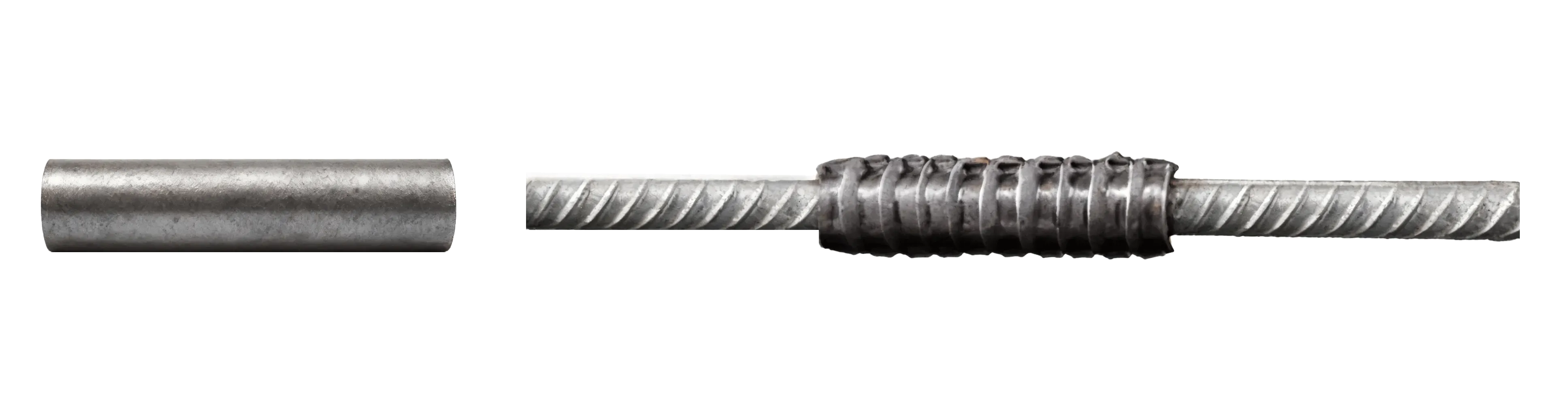
2. Swaged or Pressed Couplers
冷挤压().webp

  • Employ cold pressing or swaging to deform the sleeve around the bar ribs.
  • No threading required, which speeds installation.
  • Suitable for applications where bar-end preparation is limited.

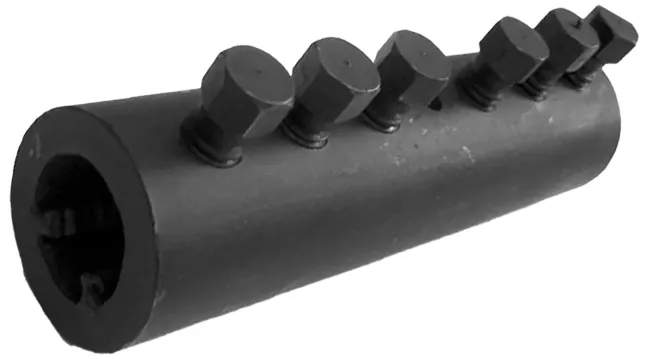
3. MBT (Mechanical Bar Splice) Couplers
未标1题-1.jpg

  • Feature a steel tube with multiple lock-shear bolts and serrated strips inside.
  • Installation involves tightening bolts until their heads shear off, securing the bars.
  • Do not require bar-end threading or special preparation.
  • Ideal for limited access sites or retrofitting.

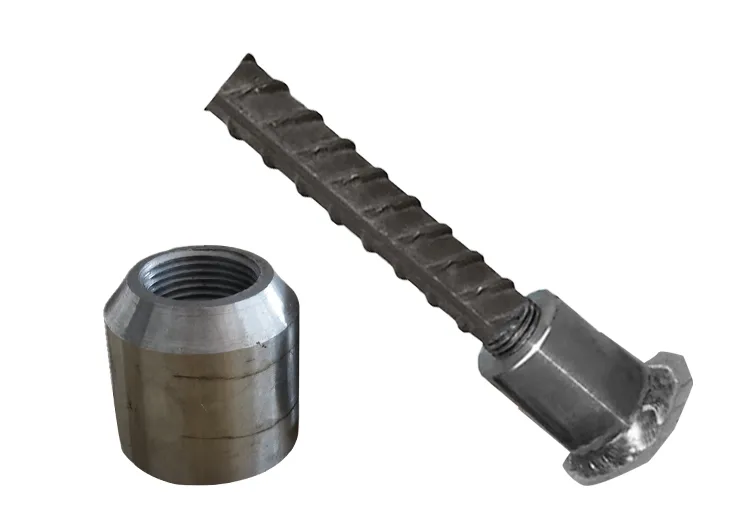
4. Welded Couplers
#可焊1.jpg

  • Use welding to join bars directly.
  • Less common due to potential metallurgical changes and need for skilled labor.

Applications of Mechanical Couplers


Mechanical couplers are versatile and used in various construction and engineering scenarios:

1. Reinforced Concrete Structures


  • High-rise buildings: To reduce congestion in columns and beams.
  • Seismic zones: Where ductility and strength are critical.
  • Segmental construction: For joining precast concrete elements.
  • Tension members: Where lap splicing is impractical.

2. Infrastructure Projects


  • Bridges and tunnels: For connecting precast segments and reinforcement bars.
  • Underground and civil defense engineering: Where waterproofing and durability are essential.

3. Mechanical Systems


  • Shaft couplings: Transmit torque between motor and driven shafts.
  • Machinery: Accommodate misalignment, absorb vibration, and improve equipment longevity.

How Mechanical Couplers Improve Construction Efficiency

Faster Installation


  • Mechanical couplers eliminate the need for long lap splices.
  • Installation is straightforward and can be performed by less specialized labor.
  • Reduces crane time and labor on site.

Simplified Design and Quality Control


  • Removes complex lap length calculations.
  • Ensures consistent quality through factory-made couplers.
  • Third-party testing validates performance, reducing inspection time.

Material Savings


  • Allows use of larger diameter bars with fewer overlaps.
  • Reduces the quantity of steel required.
  • Lowers waste, especially for expensive coated rebars.

Leave Your Message


Leave a message

We use cookie to improve your online experience. By continuing to browse this website, you agree to our use of cookie.

Cookies

Please read our Terms and Conditions and this Policy before accessing or using our Services. If you cannot agree with this Policy or the Terms and Conditions, please do not access or use our Services. If you are located in a jurisdiction outside the European Economic Area, by using our Services, you accept the Terms and Conditions and accept our privacy practices described in this Policy.
We may modify this Policy at any time, without prior notice, and changes may apply to any Personal Information we already hold about you, as well as any new Personal Information collected after the Policy is modified. If we make changes, we will notify you by revising the date at the top of this Policy. We will provide you with advanced notice if we make any material changes to how we collect, use or disclose your Personal Information that impact your rights under this Policy. If you are located in a jurisdiction other than the European Economic Area, the United Kingdom or Switzerland (collectively “European Countries”), your continued access or use of our Services after receiving the notice of changes, constitutes your acknowledgement that you accept the updated Policy. In addition, we may provide you with real time disclosures or additional information about the Personal Information handling practices of specific parts of our Services. Such notices may supplement this Policy or provide you with additional choices about how we process your Personal Information.


Cookies

Cookies are small text files stored on your device when you access most Websites on the internet or open certain emails. Among other things, Cookies allow a Website to recognize your device and remember if you've been to the Website before. Examples of information collected by Cookies include your browser type and the address of the Website from which you arrived at our Website as well as IP address and clickstream behavior (that is the pages you view and the links you click).We use the term cookie to refer to Cookies and technologies that perform a similar function to Cookies (e.g., tags, pixels, web beacons, etc.). Cookies can be read by the originating Website on each subsequent visit and by any other Website that recognizes the cookie. The Website uses Cookies in order to make the Website easier to use, to support a better user experience, including the provision of information and functionality to you, as well as to provide us with information about how the Website is used so that we can make sure it is as up to date, relevant, and error free as we can. Cookies on the Website We use Cookies to personalize your experience when you visit the Site, uniquely identify your computer for security purposes, and enable us and our third-party service providers to serve ads on our behalf across the internet.

We classify Cookies in the following categories:
 ●  Strictly Necessary Cookies
 ●  Performance Cookies
 ●  Functional Cookies
 ●  Targeting Cookies


Cookie List
A cookie is a small piece of data (text file) that a website – when visited by a user – asks your browser to store on your device in order to remember information about you, such as your language preference or login information. Those cookies are set by us and called first-party cookies. We also use third-party cookies – which are cookies from a domain different than the domain of the website you are visiting – for our advertising and marketing efforts. More specifically, we use cookies and other tracking technologies for the following purposes:

Strictly Necessary Cookies
These cookies are necessary for the website to function and cannot be switched off in our systems. They are usually only set in response to actions made by you which amount to a request for services, such as setting your privacy preferences, logging in or filling in forms. You can set your browser to block or alert you about these cookies, but some parts of the site will not then work. These cookies do not store any personally identifiable information.

Functional Cookies
These cookies enable the website to provide enhanced functionality and personalisation. They may be set by us or by third party providers whose services we have added to our pages. If you do not allow these cookies then some or all of these services may not function properly.

Performance Cookies
These cookies allow us to count visits and traffic sources so we can measure and improve the performance of our site. They help us to know which pages are the most and least popular and see how visitors move around the site. All information these cookies collect is aggregated and therefore anonymous. If you do not allow these cookies we will not know when you have visited our site, and will not be able to monitor its performance.

Targeting Cookies
These cookies may be set through our site by our advertising partners. They may be used by those companies to build a profile of your interests and show you relevant adverts on other sites. They do not store directly personal information, but are based on uniquely identifying your browser and internet device. If you do not allow these cookies, you will experience less targeted advertising.

How To Turn Off Cookies
You can choose to restrict or block Cookies through your browser settings at any time. Please note that certain Cookies may be set as soon as you visit the Website, but you can remove them using your browser settings. However, please be aware that restricting or blocking Cookies set on the Website may impact the functionality or performance of the Website or prevent you from using certain services provided through the Website. It will also affect our ability to update the Website to cater for user preferences and improve performance. Cookies within Mobile Applications

We only use Strictly Necessary Cookies on our mobile applications. These Cookies are critical to the functionality of our applications, so if you block or delete these Cookies you may not be able to use the application. These Cookies are not shared with any other application on your mobile device. We never use the Cookies from the mobile application to store personal information about you.

If you have questions or concerns regarding any information in this Privacy Policy, please contact us by email at . You can also contact us via our customer service at our Site.