

Professional Rebar Coupler Manufacturer — Shenzhen Gulis Building Materials Co., Ltd.


Is It Necessary to Add Desiccant Inside Rebar Protection Caps? — Analysis of Rebar Thread Protection Solutions

2026-04-20Visits:

Is It Necessary to Add Desiccant Inside Rebar Protection Caps? — Analysis of Rebar Thread Protection Solutions

During rebar connection construction, threaded rebar ends are usually fitted with protection caps after thread rolling to prevent damage during transportation and installation. Many customers often ask:

“When rebar protection caps are installed, is it necessary to place desiccant inside the cap to prevent moisture from entering?”

In practical applications, it is generally unnecessary to add desiccant inside standard rebar protection caps. Below is an analysis based on the function of the protection cap, moisture prevention principles, and actual application scenarios.
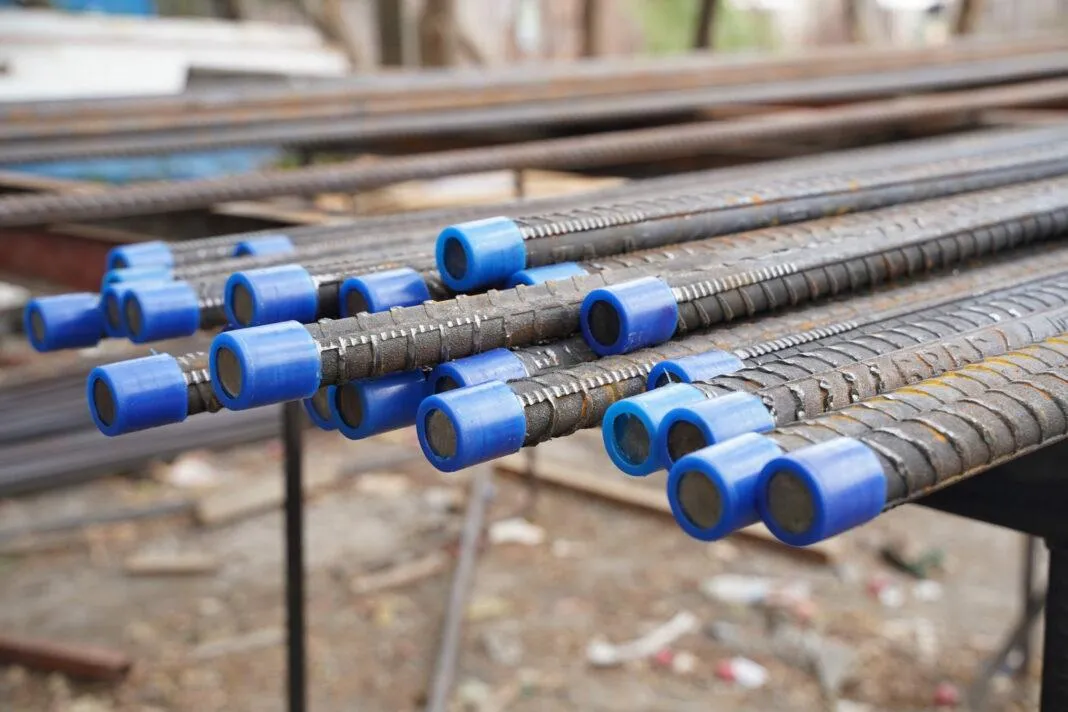
Is It Necessary to Add Desiccant Inside Rebar Protection Caps? — Analysis of Rebar Thread Protection Solutions第1张


1. What Is the Main Function of a Rebar Protection Cap?

Rebar protection caps are mainly used for temporary protection after the threaded end of the rebar has been processed. Their core functions include:

  • Protecting the rebar threads from impact damage

  • Preventing dust, dirt, and debris from entering the threads

  • Facilitating transportation and on-site storage

  • Reducing safety hazards caused by exposed steel ends

In other words, the main purpose of a rebar protection cap is physical protection, not moisture sealing.

Since most rebar protection caps are made of plastic and are simply fitted onto the rebar end, they do not form an airtight seal. Therefore, even if desiccant is placed inside, it is difficult to create an effective moisture-proof environment.


2. Why Is Desiccant Usually Not Added Inside the Protection Cap?

2.1 The Protection Cap Is Not a Sealed Space

Desiccants are only effective in relatively enclosed environments. However, standard rebar protection caps usually have gaps:

  • There is clearance between the cap and the rebar

  • Air and moisture can still enter

  • External humidity cannot be fully isolated

Under these conditions, adding desiccant inside the cap does not provide meaningful moisture protection.


2.2 Short-Term Rebar Storage Is Not Highly Sensitive to Humidity

Threaded rebars are usually put into use shortly after processing. Under normal storage and construction conditions:

  • Normal humidity does not usually cause severe corrosion

  • Light surface rust generally does not affect coupler connection quality

  • The real concerns are thread damage and contamination

Therefore, instead of focusing on moisture inside the cap, more attention should be given to preventing:

  • Mud or debris from entering the threads

  • Thread deformation caused by impact

  • Severe rust contamination


2.3 Adding Desiccant Increases Cost but Provides Limited Benefit

Adding desiccant to every protection cap would result in:

  • Higher material costs

  • Additional assembly procedures

  • Reduced production efficiency

Because the moisture protection benefit is limited, this extra cost usually offers little practical value, which is why it is rarely adopted in real construction projects.


3. In Which Cases Should Moisture Protection Be Considered?

Although desiccant is generally unnecessary inside standard protection caps, additional moisture protection may be considered in special situations such as:

3.1 Export Shipping

During ocean transportation, products are exposed to long transit times and high humidity, increasing the risk of corrosion.

3.2 Long-Term Storage

If threaded rebars are stored for a long period, moisture in the air may cause oxidation on the surface.

3.3 High-Humidity Environments

In coastal areas or during rainy seasons, metal products are more susceptible to moisture.

In these situations, the common anti-rust measures are:

  • Applying anti-rust oil to the threads

  • Using moisture-proof outer packaging

  • Placing desiccants in the outer packaging

  • Using VCI anti-corrosion materials

Rather than placing desiccant inside each individual protection cap.


4. More Effective Anti-Rust Solutions for Rebar Threads

Compared with adding desiccant inside protection caps, the following solutions are more practical:

Option 1: Apply Anti-Rust Oil

Applying anti-rust oil to the threaded end after processing can effectively reduce oxidation.

Option 2: Use Anti-Rust Protection Caps

Upgrade standard caps with anti-rust features, such as:

  • VCI anti-rust caps

  • Caps with anti-corrosion coatings

Option 3: Moisture-Proof Outer Packaging

Use outer packaging to create a moisture barrier:

  • Sealed plastic bags

  • Woven bag packaging

  • Centralized desiccant placement

This approach is usually more cost-effective and provides better protection.


5. Conclusion

In summary, standard rebar protection caps generally do not require desiccant inside, because:

  1. Their main purpose is thread protection, not airtight moisture prevention

  2. Desiccants have limited effectiveness in open environments

  3. They increase costs without providing significant benefits

For better rebar thread protection, the recommended solution is:

Anti-rust oil + moisture-proof outer packaging + anti-rust protection caps

This combination provides more reliable protection for threaded rebars and is more suitable for construction sites as well as export transportation.

If you are looking for a more effective rebar thread protection solution, it is recommended to prioritize anti-rust protection caps or moisture-proof packaging systems, rather than adding desiccant inside each protection cap.


Leave Your Message

Leave a message

We use cookie to improve your online experience. By continuing to browse this website, you agree to our use of cookie.

Cookies

Please read our Terms and Conditions and this Policy before accessing or using our Services. If you cannot agree with this Policy or the Terms and Conditions, please do not access or use our Services. If you are located in a jurisdiction outside the European Economic Area, by using our Services, you accept the Terms and Conditions and accept our privacy practices described in this Policy.
We may modify this Policy at any time, without prior notice, and changes may apply to any Personal Information we already hold about you, as well as any new Personal Information collected after the Policy is modified. If we make changes, we will notify you by revising the date at the top of this Policy. We will provide you with advanced notice if we make any material changes to how we collect, use or disclose your Personal Information that impact your rights under this Policy. If you are located in a jurisdiction other than the European Economic Area, the United Kingdom or Switzerland (collectively “European Countries”), your continued access or use of our Services after receiving the notice of changes, constitutes your acknowledgement that you accept the updated Policy. In addition, we may provide you with real time disclosures or additional information about the Personal Information handling practices of specific parts of our Services. Such notices may supplement this Policy or provide you with additional choices about how we process your Personal Information.


Cookies

Cookies are small text files stored on your device when you access most Websites on the internet or open certain emails. Among other things, Cookies allow a Website to recognize your device and remember if you've been to the Website before. Examples of information collected by Cookies include your browser type and the address of the Website from which you arrived at our Website as well as IP address and clickstream behavior (that is the pages you view and the links you click).We use the term cookie to refer to Cookies and technologies that perform a similar function to Cookies (e.g., tags, pixels, web beacons, etc.). Cookies can be read by the originating Website on each subsequent visit and by any other Website that recognizes the cookie. The Website uses Cookies in order to make the Website easier to use, to support a better user experience, including the provision of information and functionality to you, as well as to provide us with information about how the Website is used so that we can make sure it is as up to date, relevant, and error free as we can. Cookies on the Website We use Cookies to personalize your experience when you visit the Site, uniquely identify your computer for security purposes, and enable us and our third-party service providers to serve ads on our behalf across the internet.

We classify Cookies in the following categories:
 ●  Strictly Necessary Cookies
 ●  Performance Cookies
 ●  Functional Cookies
 ●  Targeting Cookies


Cookie List
A cookie is a small piece of data (text file) that a website – when visited by a user – asks your browser to store on your device in order to remember information about you, such as your language preference or login information. Those cookies are set by us and called first-party cookies. We also use third-party cookies – which are cookies from a domain different than the domain of the website you are visiting – for our advertising and marketing efforts. More specifically, we use cookies and other tracking technologies for the following purposes:

Strictly Necessary Cookies
These cookies are necessary for the website to function and cannot be switched off in our systems. They are usually only set in response to actions made by you which amount to a request for services, such as setting your privacy preferences, logging in or filling in forms. You can set your browser to block or alert you about these cookies, but some parts of the site will not then work. These cookies do not store any personally identifiable information.

Functional Cookies
These cookies enable the website to provide enhanced functionality and personalisation. They may be set by us or by third party providers whose services we have added to our pages. If you do not allow these cookies then some or all of these services may not function properly.

Performance Cookies
These cookies allow us to count visits and traffic sources so we can measure and improve the performance of our site. They help us to know which pages are the most and least popular and see how visitors move around the site. All information these cookies collect is aggregated and therefore anonymous. If you do not allow these cookies we will not know when you have visited our site, and will not be able to monitor its performance.

Targeting Cookies
These cookies may be set through our site by our advertising partners. They may be used by those companies to build a profile of your interests and show you relevant adverts on other sites. They do not store directly personal information, but are based on uniquely identifying your browser and internet device. If you do not allow these cookies, you will experience less targeted advertising.

How To Turn Off Cookies
You can choose to restrict or block Cookies through your browser settings at any time. Please note that certain Cookies may be set as soon as you visit the Website, but you can remove them using your browser settings. However, please be aware that restricting or blocking Cookies set on the Website may impact the functionality or performance of the Website or prevent you from using certain services provided through the Website. It will also affect our ability to update the Website to cater for user preferences and improve performance. Cookies within Mobile Applications

We only use Strictly Necessary Cookies on our mobile applications. These Cookies are critical to the functionality of our applications, so if you block or delete these Cookies you may not be able to use the application. These Cookies are not shared with any other application on your mobile device. We never use the Cookies from the mobile application to store personal information about you.

If you have questions or concerns regarding any information in this Privacy Policy, please contact us by email at . You can also contact us via our customer service at our Site.