

Are Rebar Straight Thread Couplers Failing Inspection? 7 Common Issues + Key Rectification Solutions – A Must-Read for Construction & Quality Inspection Personnel!

2026-03-06Visits:

Are Rebar Straight Thread Couplers Failing Inspection? 7 Common Issues + Key Rectification Solutions – A Must-Read for Construction & Quality Inspection Personnel!


Rebar Couplers: 7 Common Failure Issues + Practical Rectification Measures (Construction & QC Guide)

Rebar couplers are often described as the “hidden backbone” of reinforced concrete structures. Their performance directly affects a building’s seismic resistance and long-term durability.

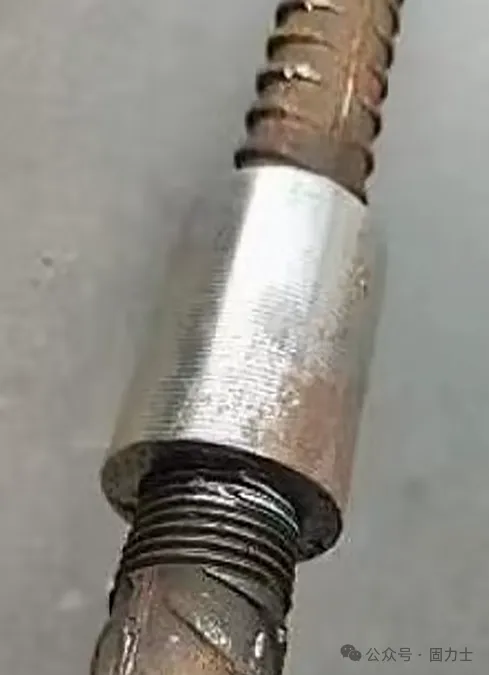
Laboratory tests show that non-compliant rebar connections occur frequently. Among them, rebar pull-out from the coupler is the most common failure type.

This guide analyzes 7 typical failure cases, including root causes and corrective actions, and provides a standardized manufacturing process for straight-thread rebar connections to help construction teams avoid common mistakes.
微信图片_2026-03-06_090647_232.png


7 Common Types of Non-Compliant Rebar Connections

1. Rebar Base Material Issues

Problem: If the source material is defective, the entire connection fails.

Common Causes

  • Rebar strength below design requirements

  • Cracks or impurities in the base material

  • Non-uniform material properties within the first 50 cm of the bar end

Corrective Measures

✅ Re-test chemical composition and mechanical properties upon rebar delivery.
✅ Cut off the first 50 cm of the rebar end before producing test specimens.
✅ Prefer rebar grades such as HRB400E or HRB500E, and avoid mixing different grades.


2. External Rebar Thread Issues

Problem: Poor thread machining leads to weak connections.

Common Causes

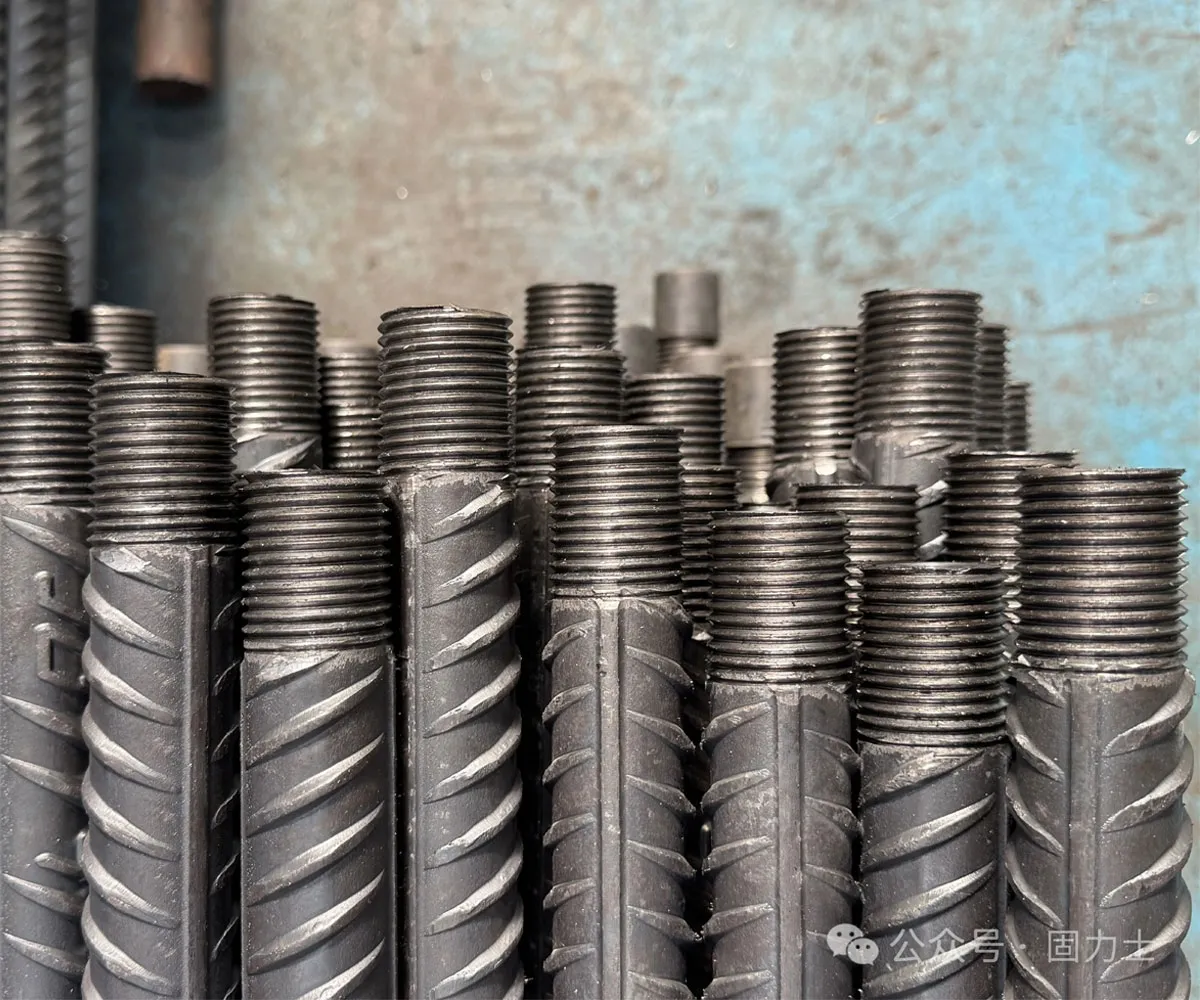
  • Worn thread rolling dies resulting in incomplete threads

  • Thread end not properly cut flat (large “horse-hoof slope”)

  • Insufficient thread length

  • Excessive or insufficient rib stripping

Corrective Measures

✅ Replace worn thread rolling wheels regularly.
✅ Ensure thread ends are cut flat with a slope ≤3°.
✅ Thread length should be ½ of the coupler length + 1 thread, verified with calipers.
1111.jpg


3. Upsetting Transition Section Problems

Problem: Improper upsetting process may cause cracks.

Common Causes

  • Insufficient upsetting temperature or pressure

  • Cracks or folds in the transition area

  • Upset diameter not reaching the required size

Corrective Measures

✅ Inspect with visual and magnetic particle testing.
✅ Ensure upset diameter is 4–6 mm larger than the original bar diameter.


4. Coupler Quality Problems

Problem: Defective couplers cannot ensure connection strength.

Common Causes

  • Low-quality materials (not made from high-quality carbon steel such as 45# steel)

  • Dimensional deviation (inner diameter, outer diameter, or length)

  • Incorrect thread parameters

  • Internal defects such as shrinkage cavities or cracks

Corrective Measures

✅ Re-inspect coupler material and dimensions upon delivery.
✅ Use thread plug gauges for 100% thread inspection.
✅ Conduct ultrasonic testing to detect internal defects.
✅ Ensure compliance with standards such as JG/T 163-2013 and JGJ 107-2016.


5. Longitudinal Cracking of the Coupler

Problem: Uneven stress distribution can cause coupler splitting.

Common Causes

  • Insufficient wall thickness

  • Brittle material properties

  • Misalignment between rebar and coupler during installation

Corrective Measures

✅ Verify coupler wall thickness to meet design requirements.
✅ Ensure proper alignment between rebar and coupler to prevent eccentric loading.

微信图片_2026-03-06_094033_707.png


6. Rebar Pull-Out from the Coupler (Most Common Issue)

This is the most frequent failure observed in laboratory tests, usually caused by four main factors:

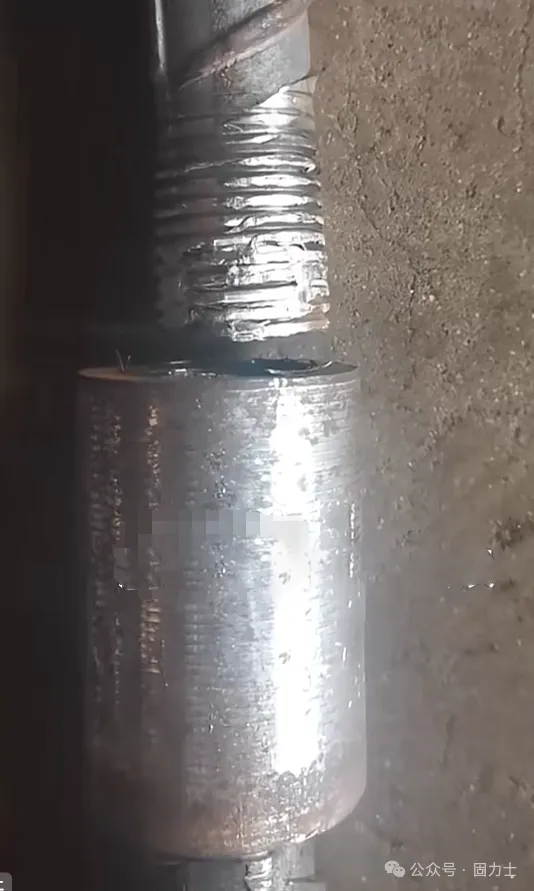
Cause 1: Rebar dimensional deviation or excessive rib stripping

→ Loose thread engagement.

Solution:
Control rib stripping length strictly to half the coupler length and verify fit with thread gauges.
微信图片_2026-03-06_095200_663.png


Cause 2: Worn thread rolling wheels

→ Incomplete threads and uneven load transfer.

Solution:
Replace rolling dies regularly and inspect thread completeness.


Cause 3: Thread end not cut flat

→ Large slope reduces effective thread engagement.

Solution:
Cut the bar end flat before threading to ensure sufficient effective threads.


Cause 4: Thread length too short

Solution:
Thread length must equal ½ coupler length + 1 thread, measured for each bar.


7. Other Contributing Factors

Even small details can lead to connection failures.

Common Causes

  • Insufficient tightening during installation

  • Incorrect coupler specification (e.g., M25 coupler used for Ø22 rebar)

  • Corrosion of threaded ends

Corrective Measures

✅ Verify tightening torque with a torque wrench after installation.
✅ Always match coupler size with rebar diameter.
✅ Protect threads from moisture and corrosion after machining.


Standardized Manufacturing Process for Straight Thread Rebar Connections

Following a standardized process significantly improves test pass rates.

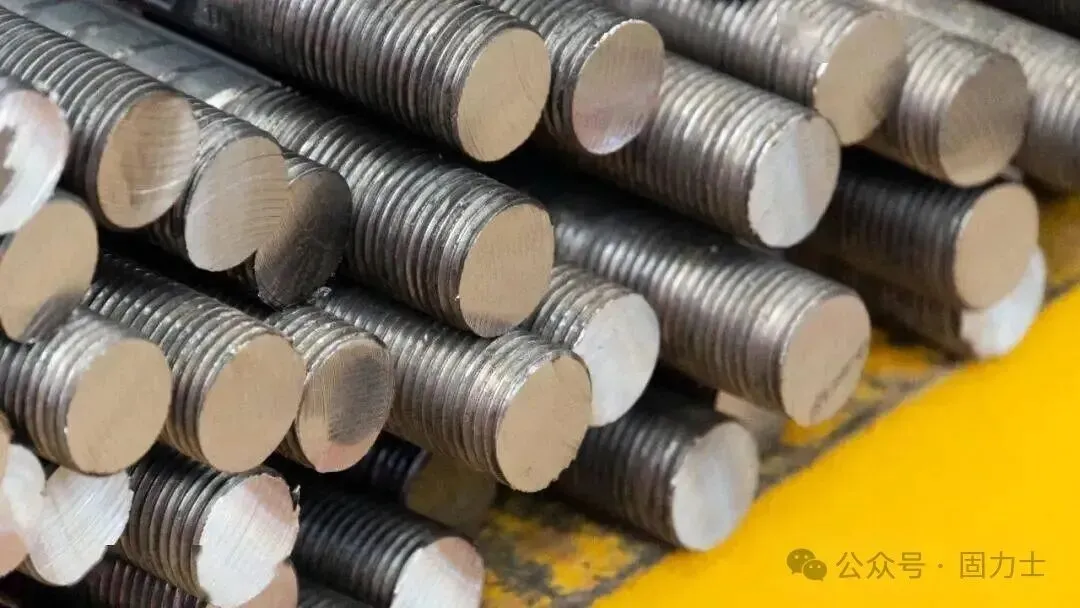
1. Rebar Preparation

  • Select qualified rebars.

  • Cut off the first 50 cm of the bar end to eliminate non-uniform material sections.

  • Cut bar ends flat using cutting machines.

  • Ensure no burrs or “horse-hoof” shapes remain.


2. Equipment Preparation

  • Install new thread rolling dies.

  • Calibrate thread rolling machine parameters before operation.


3. Thread Machining

  • Rib stripping length: half of the coupler length

  • Thread length: half of the coupler length + 1 thread

Example:
If the coupler length is 60 mm

  • Rib stripping = 30 mm

  • Thread length = 30 mm + 1 thread


4. Connection Assembly

  • Screw the coupler onto the rebar threads manually first.

  • When 2–3 threads remain exposed and resistance increases, tighten with a wrench.

  • Ensure full thread engagement.


5. Inspection and Marking

  • Verify exposed thread count (2–3 threads).

  • Confirm tight connection.

  • Mark and submit the specimen for laboratory testing.
微信图片_2026-03-06_095253_019.jpg


Key Takeaway

More than 80% of rebar connection failures are caused by small construction mistakes, especially during thread machining and installation.

Among them, rebar pull-out from the coupler is the most critical issue to control.

By strictly managing three key factors:

  • Qualified base materials

  • Precise thread machining

  • Standardized installation procedures

construction teams can significantly reduce failure rates and ensure reliable rebar connections.


💬 Discussion:
Have you encountered rebar connection problems during construction or testing?
Share your experience and solutions with other professionals in the comments.



Leave Your Message

Leave a message

We use cookie to improve your online experience. By continuing to browse this website, you agree to our use of cookie.

Cookies

Please read our Terms and Conditions and this Policy before accessing or using our Services. If you cannot agree with this Policy or the Terms and Conditions, please do not access or use our Services. If you are located in a jurisdiction outside the European Economic Area, by using our Services, you accept the Terms and Conditions and accept our privacy practices described in this Policy.
We may modify this Policy at any time, without prior notice, and changes may apply to any Personal Information we already hold about you, as well as any new Personal Information collected after the Policy is modified. If we make changes, we will notify you by revising the date at the top of this Policy. We will provide you with advanced notice if we make any material changes to how we collect, use or disclose your Personal Information that impact your rights under this Policy. If you are located in a jurisdiction other than the European Economic Area, the United Kingdom or Switzerland (collectively “European Countries”), your continued access or use of our Services after receiving the notice of changes, constitutes your acknowledgement that you accept the updated Policy. In addition, we may provide you with real time disclosures or additional information about the Personal Information handling practices of specific parts of our Services. Such notices may supplement this Policy or provide you with additional choices about how we process your Personal Information.


Cookies

Cookies are small text files stored on your device when you access most Websites on the internet or open certain emails. Among other things, Cookies allow a Website to recognize your device and remember if you've been to the Website before. Examples of information collected by Cookies include your browser type and the address of the Website from which you arrived at our Website as well as IP address and clickstream behavior (that is the pages you view and the links you click).We use the term cookie to refer to Cookies and technologies that perform a similar function to Cookies (e.g., tags, pixels, web beacons, etc.). Cookies can be read by the originating Website on each subsequent visit and by any other Website that recognizes the cookie. The Website uses Cookies in order to make the Website easier to use, to support a better user experience, including the provision of information and functionality to you, as well as to provide us with information about how the Website is used so that we can make sure it is as up to date, relevant, and error free as we can. Cookies on the Website We use Cookies to personalize your experience when you visit the Site, uniquely identify your computer for security purposes, and enable us and our third-party service providers to serve ads on our behalf across the internet.

We classify Cookies in the following categories:
 ●  Strictly Necessary Cookies
 ●  Performance Cookies
 ●  Functional Cookies
 ●  Targeting Cookies


Cookie List
A cookie is a small piece of data (text file) that a website – when visited by a user – asks your browser to store on your device in order to remember information about you, such as your language preference or login information. Those cookies are set by us and called first-party cookies. We also use third-party cookies – which are cookies from a domain different than the domain of the website you are visiting – for our advertising and marketing efforts. More specifically, we use cookies and other tracking technologies for the following purposes:

Strictly Necessary Cookies
These cookies are necessary for the website to function and cannot be switched off in our systems. They are usually only set in response to actions made by you which amount to a request for services, such as setting your privacy preferences, logging in or filling in forms. You can set your browser to block or alert you about these cookies, but some parts of the site will not then work. These cookies do not store any personally identifiable information.

Functional Cookies
These cookies enable the website to provide enhanced functionality and personalisation. They may be set by us or by third party providers whose services we have added to our pages. If you do not allow these cookies then some or all of these services may not function properly.

Performance Cookies
These cookies allow us to count visits and traffic sources so we can measure and improve the performance of our site. They help us to know which pages are the most and least popular and see how visitors move around the site. All information these cookies collect is aggregated and therefore anonymous. If you do not allow these cookies we will not know when you have visited our site, and will not be able to monitor its performance.

Targeting Cookies
These cookies may be set through our site by our advertising partners. They may be used by those companies to build a profile of your interests and show you relevant adverts on other sites. They do not store directly personal information, but are based on uniquely identifying your browser and internet device. If you do not allow these cookies, you will experience less targeted advertising.

How To Turn Off Cookies
You can choose to restrict or block Cookies through your browser settings at any time. Please note that certain Cookies may be set as soon as you visit the Website, but you can remove them using your browser settings. However, please be aware that restricting or blocking Cookies set on the Website may impact the functionality or performance of the Website or prevent you from using certain services provided through the Website. It will also affect our ability to update the Website to cater for user preferences and improve performance. Cookies within Mobile Applications

We only use Strictly Necessary Cookies on our mobile applications. These Cookies are critical to the functionality of our applications, so if you block or delete these Cookies you may not be able to use the application. These Cookies are not shared with any other application on your mobile device. We never use the Cookies from the mobile application to store personal information about you.

If you have questions or concerns regarding any information in this Privacy Policy, please contact us by email at . You can also contact us via our customer service at our Site.